

Articles (29)
By Mark Boahndao
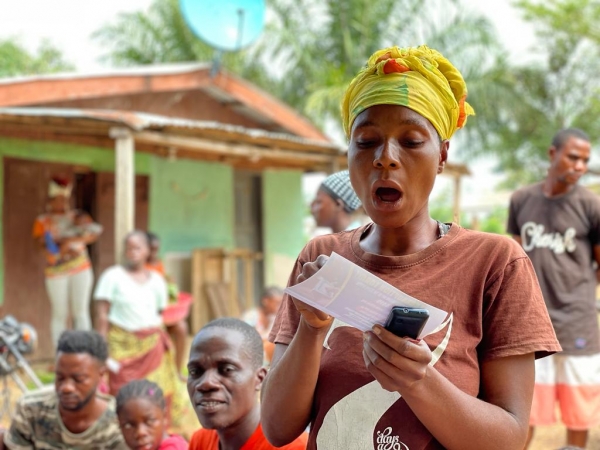
Nimba, Sanniquelle, April 19, 2023 – “Awareness-raising is the first step to tackling corruption. When we talk to each other about corruption, people will be afraid to get involved with it.” Patricia Z. Goyee, a prominent citizen of Sanniquellie, Nimba noted during a community engagement by CENTAL under the auspices of the Anti-Corruption Innovation initiative.
Corruption is seriously hampering the nation’s prestige while undermining economic growth, exacerbating poverty, and eroding public trust in institutions. Fortunately, technology can be a powerful tool for combating corruption and raising awareness about the issue. Tested and tried in other countries, technology is tremendously helping in the fight against this menace. Thus, this innovative method has been grasped by anti-graft institutions, the Government, civil society actors, donors, and citizens on the note that it will eventually help in the fight against corruption.
In partnership with the Liberia Anti-Corruption Commission (LACC), Integrity Watch Liberia, and the Accountability Lab Liberia with support from the Swedish International Development Cooperation Agency (SIDA) through the United Nations Development Program (UNDP), the Center for Transparency and Accountability in Liberia (CENTAL) is enlightening the minds of citizens about the use of technology – an innovation to report corruption and other mediums in Sanniquellie, Nimba County. The awareness about the usage of the mobile app and web-based platforms to rally citizens' support to report, research, and follow up on trends in the fight against corruption.
In continuation of the awareness-raising activities in the counties, efforts are being applied to strengthen the fight against corruption by encouraging inhabitants of Sanniquellie to report corruption by using the TALKAY mobile app and web-based platforms, and other mediums to report acts of corruption. Citizens were astonished at the level of engagement the awareness has taken. The awareness-raising took the streets, communities, a local radio, high schools, and the community college within the county. Heralded through music, flyers, stickers, one-on-one engagements, and the media, the message seems to be resonating well.
From the qualitative research carried out in the project counties – Grand Bassa, Bomi, Nimba, Bong, and Montserrado, 9 out of 10 persons asked had prior knowledge of corruption but were lacking the reporting mediums, especially by the use of technology. Leveraging their knowledge, they were encouraged to use technology to report.
Women are actively taking the lead in these discussions and making salient points. “We pah, we na know about your book people thing, we will tell our children them to use it for us”, -Martha Brown, speaks out in colloquia. On the other hand, young people are thrusting themselves into discussions about corruption and prudently recommending ways to reduce corruption.
“If we practically create substantial awareness of corruption, report and expose corrupt personalities, and ensure persecution, this will serve as a deterrence. And gradually, we will make gains in the fight against this public enemy” – Emmanuel Tokpa, Student.
In high spirits, the team continues to take awareness among the locals by encouraging more people to report using technology and other mediums. These efforts and more will place a yoke on corruption, thus reducing and possibly eradicating it.
Corruption: Citizens are Speaking Out; Is anyone listening?
Written by Editor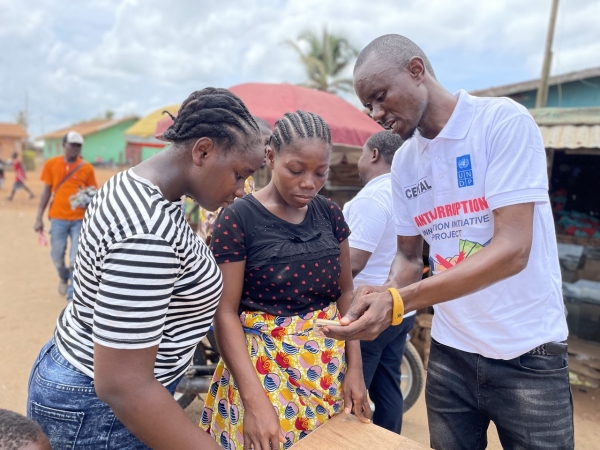
By Mark Boahndao
Buchanan, April 12, 2023 – Corruption in Liberia is not a new problem; it has been present in the country for many years and continues to take on new forms. Its rampancy has become ingrained in the country's culture. Citizens continue to herald their voices about the culture of impunity where corruption is seen as acceptable and has become a norm in society. In the wake of this, there must be innovative and robust ways to tackle this menace — starting from the family to the Government.
In continuation of efforts to strengthen the fight against this national enemy – corruption, the Center for Transparency and Accountability in Liberia (CENTAL) in partnership with the Liberia Anti-Corruption Commission (LACC), Integrity Watch Liberia, and the Accountability Lab Liberia with support from the Swedish International Development Cooperation Agency (SIDA) through the United Nations Development Program (UNDP), has rekindled the awareness-raising around the use of technology as an innovation to report corruption and other mediums in Grand Bassa, Bomi, Bong, Nimba, and Montserrado counties.
The citizens of Grand Bassa County were awakened to the sound (music) of awareness about the TALKAY mobile app and website platform to file complaints or report corruption. Prior to street engagement, the media (local radio) was prioritized to adequately and simply disseminate this innovation of reporting corruption. Ordinarily, most citizens rely on the media to provide information and education. Using the media to increase citizens’ awareness and reportage about the act and other forms of corruption through an innovative approach has been at a pivotal point of the activities in the west central portion of Liberia — Buchanan.
As awareness-raising continues to intensify in the streets, schools, and communities, citizens continue to raise their voices proclaiming the adverse impacts of corruption and how it is gradually permeating society from the bottom to the top. Citizens are increasingly recognizing the importance of taking action against corruption and are raising their voices to demand accountability and transparency from their leaders. Despite the challenges, the fight against corruption is gaining momentum, and citizens' voices are becoming increasingly important in holding the government and its leaders accountable. By continuing to raise their voices and demand transparency and accountability, citizens can play a critical role in building a more just and equitable society.
“Corruption is being practiced by almost everyone.” Patience Dolo. As a marketer, she is alarmed about the prevalence of corruption among market women. Most of them including herself are involved in corrupt practices because the wholesalers of dry and perishable goods are cheaters. “The only way we can reduce corruption is to punish the big people. When we see their level of punishment, it will serve as deterrence for us not to get involved it in.” She added.
Love S. Flahnma, a student boldly lamented the leniency of the school administrators to take action against corrupt teachers. “If we continue to take less action against teachers, students will not be afraid to practice corruption”, She concluded.
According to the analytics of the TALKAY web platform [https://www.talkay.org/reportstatistics], sixty-three (63) complaints have been reported from twelve (12) counties since the intense outreach activities started two (2) months ago across Liberia. Rivercess is in the lead with 14 complaints and Grand Bassa holds the least with 2 complaints. Montserrado, Margibi, Grand Kru, Grand Gedeh, Bong, Nimba, Lofa, Grand Cape Mount, Gbarpolu, and Bomi falls below 10 complaints. For the project counties, Montserrado, Grand Bassa, Bomi, Nimba and Bong counties have accumulated thirty-three (33) complaints so far. Most of the cases reported from these counties borders on the misuse of Government properties, misuse of public funds, bribery, and extortion. The percentage of reporting per gender is 21% male and female 16%. Cases investigated is at 5% while those under investigation is at 8% and allegation of corruption is at 87%.
As the team’s spirit continues in the awareness-raising around the country on the innovation of reporting corruption, Atty. Bendu Kpoto, CENTAL’s Legal Officer, and team members admonished citizens to vote wisely, especially by voting for those candidates based on their past track records taking into consideration transparency and accountability. And while citizens continue to express displeasure at corruption, the question lingers: Is anyone listening?
How CENTAL aborted over LRD$60,000 payment to school administration in Rivercess
Written by Editor
How CENTAL aborted over LRD$60,000 payment to school administration in Rivercess
Corruption and fraud in schools are causing serious economic constraints for parents/guardians and compromising the future of the youth in Liberia. It is preventing poorer parents from sending their children to school, and lowering teaching standards thus wrecking the education system.
In February, 2022, a matter was reported by students of the Cestos High School in Rivercess County regarding what was referred to as, ‘illegal collection’ of L$2,000.00 from over thirty (30) senior students which is equivalent to L$ 60,000 and US$ 397.39 of the School as summer school fee. The fee was intended to be paid by students who didn’t make successful passes in the School’s academic requirements. The amount was in addition to a LRD$ 5,000.00 per student equivalent to L$ 150.000 and US$ 993.48 stipulation of the Ministry of Education for all senior students as graduation fee. Because of the constraint some students had in paying the fee, they decided to report and seek redress. This is one of the many instances that is unheard of in schools and other institutions in and around the country.
What did CENTAL Do?
Upon receipt of the report, CENTAL, through its County Field Officer held immediate engagement with the School’s administration aimed at resolving the matter.
Following the engagement, the administration decided to disregard the collection of the extra fees and reimbursed students who made initial payments. The administration’s plan to have collected over LD$60,000.00 from the already struggling senior students was aborted as a result of CENTAL’s prompt intervention.
Socially, the illegal collection of fees from student for service in education has a wide range of consequences. It acts as a barrier to education, because it makes the cost of acquiring an education prohibitive, or cause reluctance in students to put effort in learning or acquiring education. Amazingly, many students, would want to report but the lack of reporting mechanism, especially one that protects the identities of whistleblowers has prevented many people from reporting this act of corruption, even if they opposed it.
Many have been fearful of different factors – loss of jobs, relationships and even their lives. Or treatments meted out against a few colleagues who dared and opposed the act were enough reasons to compel other into submission or self-censorship. There has never been any framework or mechanism to facilitate reporting acts of corruption in the public and private sectors.
To this end, CENTAL, under its National Integrity Building and Anti-Corruption (NIBA) Program established a confidential reporting mechanism to reporting.
The Advocacy and Legal Advice Center (ALAC), through a toll-free hotline number, 4432 provides a safe space for citizens to report all acts of corruption and integrity related in homes, communities, schools, workplaces etc. It also provides access to information and legal advice for victims of corruption and others citizens.
Over the last two years, CENTAL has increased anti-corruption and integrity building awareness, especially the need to freely and confidentially report and seek redress to acts of corruption across its seven project counties – Montserrado, Bong, Nimba, Grand Bassa, Bomi, Gbarpolu and Rivercess.
Feedbacks from the different engagements indicate that the message is resonating with the people. They are reaching out. The ALAC has so far recorded over one hundred and eighty-eight (188) cases of corruption have so far. Of this, one hundred and fifty-seven (157) were males while thirty-one (31) were females. The abortion of over LRD $ 60.00 illegal payment is one of the many cases resolved.
Some of these cases were resolved either through mediation, legal advice while others were referred to relevant public authorities for redress.
The NIBA Program is a 3.5-year Program funded by the Government of Sweden through the Swedish International Development Cooperation Agency (SIDA).
Pregnant Women abandoned at Maternity Waiting Home in Bong County
Written by EditorPregnant Women abandoned at Maternity Waiting Home in Bong County
By: Dr. Akiah P. Glay
Gender Officer/ Coordinator, Open Expenditure Initiative
Center for Transparency and Accountability in Liberia (CENTAL)
Over eight (8) pregnant women at the Maternity Waiting Home (MWH) in Forequelleh Town, Bong County are said to be faced with the issue of abandonment and lack of support. Like many MWHs across Liberia, the facility was constructed to accommodate pregnant women during pregnancy and baby mothers after birth to enable them have timely access to essential childbirth treatments and care.
But, pregnant women at the Forequelleh Town Safe Home have been left without the needed support and care as intended. Some have described the Home as a ‘death trap’ rather than a Safe Home.
“It is only because our homes are far away from the hospital that’s why we are here. Otherwise, we would prefer to stay home until our due dates …”
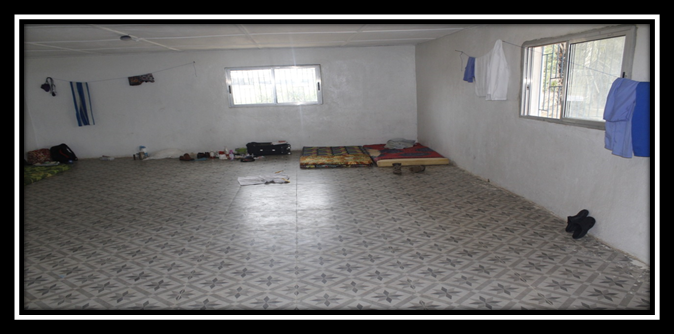
_____Women who stay at the Forequelleh MWH
Inside the MWH in Forequelleh
Garmai and Hannah were met cooking outside on a wood fire at the front of the Maternity Waiting Home (MWH) in Forequelleh town, district# 4, Bong County. They are in their ninth month of pregnancy and have been at the facilitate for nearly two weeks.
Aside from the physical structure provided by the government, the rest including bed, food and other social and dietary needs are provided by their family. They also have to go and fetch water, wood and basic items to prepare the food brought by their relatives. If MWH is intended to be a safe home to reduce maternal mortality rate, with these conditions, it seems a death trap for women and their unborn due to the many challenges.
Background
Maternity Waiting Homes (MWHs) are accommodation located near a health facility where women can stay towards the end of pregnancy and/or after birth to enable timely access to essential childbirth or care for complication. In rural Liberia, the trip for pregnant women to visit the nearest hospital/clinic often entails a journey of many miles, usually on foot.
Therefore, MWHs are developed in buildings adjacent to a district hospital/clinic to accommodate high-risk women. MWH in Forequelleh, Bong county is one of the many Waiting homes confronted with challenges for pregnant women in Liberia.
The Liberia Demography and Health Survey 2019-2020 ((LISGIS), 2019-2020) result shows that over 5 years prior to the survey, infant, child, and under-5 mortality rates were 63, 33, and 93 deaths per 1,000 live births, respectively. Currently, Child mortality has declined since 2013.
However, under-5 mortality has remained relatively stagnant, and infant mortality has increased. Given this, the establishment of MWH is expected to decrease infant and maternal mortality. But on the contrary, it has increase instead. What exactly is hindering its decline?
Discussion
MWHs in Liberia are constructed as part of the many efforts made to strengthen healthcare system and accommodate women who travel long distances to seek maternity care.
The hope is that these facilities will help supplement the fight against maternal mortality and reduce pregnancy-related death and other complications. With the hope of discouraging home-deliveries, maternal waiting homes are an essential piece of the effort towards accessible health care.
However, for towns and communities without a health facility, pregnant women still either choose to deliver at homes, which many times come with huge risks; or walk many kilometers to reach the lone maternal waiting home available. For those who muster the courage to go over to waiting homes, challenges abound, particularly including lack of food, safe drinking water, flush toilet and even bed.
The lack of basic social and dietary needs is significantly affecting, if not defeating the purpose because many pregnant women would rather stay at home where they have family members to cater for them which is risky than withstanding dreadful situation at the center.
The Center for Transparency and Accountability in Liberia (CENTAL) under the National Integrity Building and Anti-Corruption program (NIBA) implemented at its institution with Funding from the Government and People of Sweden through the Swedish Development Cooperation Agency (SIDA), conducts monitoring visitation in seven (7) counties in Liberia namely-Montserrado, Bomi, Grand Bassa, Rivercess, Nimba, Bong and Gbarpolu counties every year of its project implementation to compliment government effort through monitoring the evaluating projects sponsored with the County Social Development Fund (CSDF), and also, the direct impact of those projects on citizens. Amongst the many projects monitored, the MWH in Forequelleh, Bong county could not be ignored but flagged-out as one of the many MWHs that faces challenge.
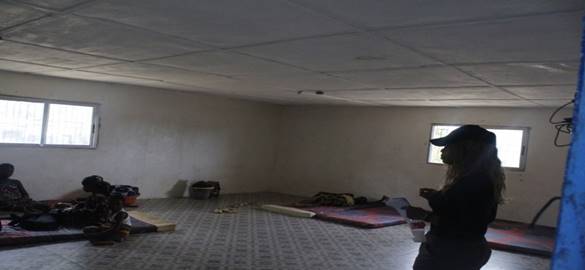 Pregnant women seen in the above picture are sitting on a flat mattress on the floor. Inside this room, they also have their firewood, cooking utensils etc. In 2018/2019, US$ 25.000.00 was allotted from the County Social Development Fund (CSDF) to build this maternity home in Forequlleh, Panta, according to the Project Management Committee report.
At the end of 2021, this project was completed, dedicated and now in use. Garmai and Hannah are among several other pregnant women met at the facility waiting to bring forth their babies. They told the team about the many challenges they are face with at the center.
They regrettably said, they would have preferred to stay closer to their relatives than to starve. These women confided that they barely get food to eat daily. More to that, even if they mobilize and get a cup of rice, it is barely enough, so they literally go hungry for days or eat boiled rice without any sauce sometimes.
Throughout their stay at the facility, they provide everything including bed, sheets etc. Even after delivery, both mother and child are compelled to contend with the harsh reality thus causing malnutrition for a child as the mother has less nutrient in her breastmilk for the child.
(UNICEF, 2020) stated that most babies in Liberia receive plain water, other liquids, and food in addition to breastmilk during their first six months of life, contributing to child malnutrition, illness, and even death. Also, Liberia ranks the 8th globally, 3rd in Africa for maternal and newborn mortality which means, since 2000, the maternity death rate continued to increase. Amid these, the House of Legislature passed a bill to protect babies’ health by mandating mothers to breastfeed their babies at least six months. While this seems a good step, can we consider what goes into the mother breast to produce nutrition for the child? Is it mother’s milk or the lack of quality care, nutritious food and safe enabling environment that is the problem? The need to upgrade MWHs in rural Liberia is essential to combating Maternity Mortality rate.
Conclusion and Recommendation
As ending maternal mortality is a Millennium Development Goal, and supported by the WHO, UN, as well as many large non-governmental organizations, innovative solutions must be supported. Funding should be provided to equip these facilitates.
The government should ensure financing and effective management system to alleviate the financial burden from individuals at the MWHs. The government should also, strengthen management support systems, including procurement, and logistics for MWHs in all part of Liberia. These are very important if these projects must remain relevant in attracting and housing those at the verge of delivery, as well as promoting safe delivery practices.
“Women, O Women!’: In celebration of the International Women’s Day 2022
Written by Editor
‘Women, O Women!’ It's the rallying cry of Liberia’s women movement. The cry summons a spirit that emboldens against the timidity that has held many women from venturing on new frontiers. It is a call that awakens women who have grown content with mediocrity and charges them to ‘do something’. It reminds of the inherent qualities that women possess and can employ to be even better. In a proper sense, however, it is a call to battle—a battle against all forms of suppression fostered by a male-dominated society. The struggle aims for a society where women have the opportunity to become productive professionals and not just consigned to the care economy; where customs do not subtract from the bodily integrity of women, and where having a female President is not just an isolated accomplishment. As we celebrate International Women’s Day today, it is important to reflect on the conditions of Liberian women and their pursuit of a more equitable society where governance without meaningful representation and participation of women is only a thing of the past.
In the shadows
Women have not always occupied prominent roles in Liberian society, and their voices have not always been publicly heard. In order to appreciate the early experiences of Liberian women, however, an assumption of homogeneity must not be made. While findings may vary due to ethnic, religious, and other considerations, a broader examination of women in the Liberian state must consider two groups that generally constituted the state: Americo-Liberians and Natives. Scholars are in agreement that a key commonality between the groups lie in the fact that women were not equal with men. Also, women were the dominant force in domestic work and child-rearing. However, Americo-Liberian women enjoyed some of the most progressive rights enjoyed by women across the world at the time. According to Newman, they could buy and sell land, enter into contracts, bring legal suits and initiate divorces, appeal to the Legislature, and exercise other forms of agency. [1]
In contrast, women in the customary or native setting were lacking in autonomy. According to Fuest, women were married off very young to older men, children belonged to the lineage of the husband, and a woman could lose access to her children and marital property upon the death or divorce of her husband, especially where she refuses to re-marry within the husband’s family. [2] Fuest also relates the unfortunate fact that women were accumulated by powerful men who then redistributed women’s sexual and reproductive services to foster political alliances and win other clients. Also, women did not engage in extensive market activities. But women also yielded other forms of power. The Sande female secret society accumulated resources and wielded considerate power over initiates and members, with the same being recognized by their male counterparts. In the southeast, a council of female elders could deliberate and veto decisions made by men through collective demonstrations, while individual women became political leaders in the Northwest.[3] Most notable is Madam Suakoko who was appointed by President Daniel E. Howard (1912-1920) as Clan Chief of Kiayea.[4] She is credited with unifying the clan; playing a key role in annexing Bong, Lofa, and Nimba, to Liberia; aiding government’s military operations; and contributing to the establishment of three major institutions in the district now named after her: Central Agricultural Research Institute (CARI), Phebe Hospital, and Cuttington University. [5]
Generally, the situation of women in Liberia did not receive major attention until the second half of the twentieth century.
The turning point
Liberian women began to rally against marginalization by the 1930s. The first cooperate move towards their political rights began in 1931 with the Liberian Women’s League under the leadership of Sarah Simpson George. [6] Their engagement began by assisting the government in improving the sanitary conditions of Monrovia. In 1932, another group under the leadership of Maude A. Morris took a more direct approach by petitioning the Legislature to request an amendment of the Constitution to extend suffrage to women. [7] In 1942, President Edwin J. Barclay’s administration passed a “Referendum Act” to amend the Constitution granting women’s right to vote but the amendment did not happen as it was never referred to constituents. [8] In 1946, however, the right to vote and hold political office was finally extended to women under President William V.S. Tubman. [9] This meant that Americo-Liberian women were no more confined to secretarial duties or teaching in schools. [10] Women then began to occupy key offices in government and were elected to the national legislature. For example, Elizabeth Collins became the first female senator, Ellen Mills Scarborough became the first female representative, Etta Wright acted on several occasions as Secretary of Defense, and Angie Brooks rose from a Liberian diplomat to the prestigious position of President of the United Nations General Assembly in 1969. [11] In 1971, Emma Shannon Walser became the first woman to become a judge in Liberia, [12] and Dr. Mary Antoinette Brown Sherman made history when she was the first woman to be inaugurated as President of the University of Liberia and President of an African institution of higher learning in 1978. [13] At the beginning of the 1980s, women constituted 32.2 percent of the secondary school teachers, 30 percent of the university teachers, 14.7 percent of the judges, 9.4 percent of the doctors and dentists, and 48.2 percent of the nurses. [14]
War Years
The outbreak of the civil war in 1989 greatly affected the vulnerable, including women and children. There are many horrific accounts of rape, torture, and murder meted out against women. Hardship was also endured as a result of conflict-induced displacement. But it is important to note, however, that women were also actors in the conflict. Women units existed amongst all the armed factions, although estimates of the number of women fighters range from 2 to 5% of the total. [15] Some even gained notoriety as fierce warriors. But the war years seem to have made women, even more, stronger as it increased the scope of their economic activities as well as their political involvement. Women had to step up as many men (husbands, fathers, sons, brothers) were killed or had to flee to hide in the forest. Women were forced to take on traditional tasks of men such as making bricks, building and roofing houses, and clearing farms, while local narratives refer to many women who physically protected their husbands and family members from combatants. [16] Market women made extended businesses by crossing fighting lines into territories where men could not go. Indeed, many analysts agree that since the war, women’s ability to live independently has increased dramatically and many have assumed key roles in society a ‘remarkable emancipation from their pre-war positions’. [17] In a remarkable move towards mainstreaming gender issues across Liberian society, the Ministry of Gender and Development was established in 2001.
Many women’s organizations have emerged since the war era. In fact, women’s organizations were instrumental in ending the 14-year conflict. Thousands of women in white under the umbrella of the Women in Peace Building Network (WIPNET) took to the streets to demand an end to the violence. Women also insisted on being part of peace talks to which only the (male) leaders of the armed factions were invited. [18] This ultimately yielded results. As Chinkin notes, the Comprehensive Peace Accord of 2003 contains gender-relevant provisions: women inclusion in the Governance Reform Commission, women organizations representation in the National Transitional Legislative Assembly, gender balance in all elective and non-elective appointments’ within the National Transitional Government of Liberia, amongst others. [19] Leymah Gbowee and many others came to prominence during this period as they mobilized and organized women across ethnic and religious dividing lines to bring an end to the conflict. Gbowee became a joint recipient of the Nobel Peace Prize in 2011 along with fellow country-woman Ellen Johnson Sirleaf and Tawakkul Karman of Yemen. [20]
Post-war developments
A major win was soon made on the legal front, with the enactment of an Inheritance Law in 2003 to protect the marriage rights of women. By 2006, history was made with the inauguration of Africa’s first elected female head of state, Ellen Johnson-Sirleaf. Notably, Madam Ruth Sando Fahnbulleh Perry had served before her as the interim Chairman of the Council of State of Liberia from 3 September 1996 until 2 August 1997. By 2008, women’s representation in the legislature was low at 15%. With Ellen in power, the glass ceiling had been broken and the obvious anticipation was centered around how different she would run the government, including how women would be involved. By 2008 also, women occupied 22% of cabinet positions in the Sirleaf government. She also appointed the first female Chief of Police. An anti-rape law was passed and a fast-track court established to deal with gender-based violence. Hundreds of markets were built or renovated during her regime for thousands of marketers. But Sirleaf’s support for women in politics soon came under question. By 2017, only 4 out of 21 cabinet ministers were female. Pailey and Reeves are of the view that she did nothing to position women favorably for political office citing her refusal to honor a petition from women to support a woman as her party’s candidate for a 2009 by-election. [21] They further contend that Sirleaf did little to increase females in leadership roles within her Party (the Unity Party). According to Pailey and Williams, Sirleaf did not actively support a proposed law granting 30 percent of political party leadership to women as well as a trust fund to finance electoral campaigns. They lament Sirleaf’s silence when another bill allotting five seats for women in the Legislature was rejected by largely male Senators given that a similar bill had already propelled women to high public offices in Rwanda, Senegal, and South Africa. Sirleaf was later expelled from her party days before leaving office. [22] She was reinstated by the National Elections Commission the following year.[23]
Another major criticism of Sirleaf was her defense of nepotism and seeming unwillingness to tackle corruption. Admittedly, Liberia reached its highest score of 41 on the Corruption Perceptions Index of Transparency International in 2012 largely due to anti-corruption legislation and institutions established during her administration. However, the political will to investigate and prosecute persons of corruption was lacking. Fellow Nobel Laureate, Leymah Gbowee resigned from the Peace and Reconciliation Commission criticizing Sirleaf’s decision to appoint her three sons to senior government positions.
The checkered legacy of Sirleaf arguably stands in the way of future female contenders for the highest office. However, the legacies of male Presidents have not been any better. So while Sirleaf might have disappointed in different respects, opportunities still exist for women in politics, as well as for generally increasing the role of women in the life of the nation. President George M. Weah seemed to have jumped at this opportunity when he declared himself feminist-in-chief upon taking office. But only a few years later, his party (Coalition for Democratic Change) submitted its candidates for the Senatorial Elections without a single female candidate. [24] Currently, only 5 out of his 19 cabinet ministers are females. [25]
All hope is not lost, however. We remain hopeful that the women of Liberia stay true to their commitment to achieving a just and equitable society for all. We celebrate the many women, known and unknown, who sacrificed for a better Liberia. Some got a glimpse of it during their lifetime and others did not. To those who currently bear this task, the nation looks up to you. A better Liberia is possible. Women, O Women!
About the Authors
Gerald Dan Yeakula is a Liberian lawyer currently based at the Center for Human Rights, University of Pretoria in South Africa where he is pursuing a Master’s of Law Degree in Human Rights and Democratization in Africa. He is Program Manager at the Center for Transparency and Accountability in Liberia (CENTAL).
Akiah Precious Glay holds a Doctorate in Sociology with Emphasis in Conflict Escalation from the Selçuk University, Konya, Turkey, Master’s in Peace and Conflict Studies: Nicolaus Copernicus University Torun, Poland and the Kofi Annan Institute for Peace Studies, University of Liberia. She currently serves as the Gender Officer at CENTAL
Leelah P. Semore holds a Masters in Environmental Science from the Cuttington University and a Bachelor in Plant and Soil Science from the same university. She is currently a Program Assistant at CENTAL.
[1] D Newman, ‘The Emergence of Liberian Women in the Nineteenth Century’ Howard University, Washington, DC, 1984, pp. 197–8, 378–9.
[2] V Fuest ‘“This is the Time to Get in Front”: Changing Roles and Opportunities for Women in Liberia’ (2008) 107 African Affairs 201.
[3] As above
[4][4] ‘Madame Suakoko’ (Historical Preservation Society of Liberia) <https://www.hpsol-liberia.net/madame-suakoko/> accessed 7 March 2022.
[5] As above
[6] ‘The Federation journal. ([North Carolina]) 1945-19??, March 01, 1953, Image 1 · North Carolina Newspapers’ <https://newspapers.digitalnc.org/lccn/2016236536/1953-03-01/ed-1/seq-1/ocr/> accessed 7 March 2022.
[7] As above
[8] As above
[9] AE Brooks ‘Political Participation of Women in Africa South of the Sahara’ (1968) 375 The Annals of the American Academy of Political and Social Science 82.
[10] (n 2) Above
[11] C Brooks ‘Liberia Celebrates William V. S. Tubman’s 122nd Birth Anniversary Tomorrow, November 29th’ (Global News Network) <https://gnnliberia.com/2017/11/28/liberia-celebrates-william-v-s-tubmans-122nd-birth-anniversary-tomorrow-november-29th/> accessed 7 March 2022.
[12] ‘Liberia: Liberian Women Unite to Push for More Seats in the Legislature’ (FrontPageAfrica) <https://frontpageafricaonline.com/politics/liberia-liberian-women-unite-to-push-for-more-seats-in-the-legislature/> accessed 7 March 2022.
[13] ‘Pres. Sirleaf Inducts Dr. Ophelia Weeks As 14th President of University of Liberia’ (FrontPageAfrica) <https://frontpageafricaonline.com/news/2016news/pres-sirleaf-inducts-dr-ophelia-weeks-as-14th-president-of-university-of-liberia/> accessed 8 March 2022.
[14] (n 2) Above
[15] M Moran ‘Our Mothers Have Spoken: Synthesizing Old and New Forms of Women’s Political Authority in Liberia’ (2012) 13 17.
[16] (n 2) Above
[17] As above
[18] (n 15) above
[19] Chinkin, ‘Gender, international legal framework and peacebuilding’.
[20] ‘The Nobel Peace Prize 2011’ (NobelPrize.org) <https://www.nobelprize.org/prizes/peace/2011/press-release/> accessed 8 March 2022.
[21] RN Pailey and KR Williams ‘Africa at LSE: Is Liberia’s Sirleaf really standing up for women? #LiberiaDecides’ 3.
[22] ‘Ellen Johnson Sirleaf: The legacy of Africa’s first elected female president’ BBC News (22 January 2018) <https://www.bbc.com/news/world-africa-42748769> accessed 8 March 2022.
[23]Admin ‘Former President Sirleaf, others back to Unity Party’ (Liberia Public Radio, 23 June 2019) <https://liberiapublicradio.com/2019/06/03/former-president-sirleaf-others-back-in-unity-party/> accessed 8 March 2022.
[24] ‘Liberia’s self-proclaimed “feminist president” Weah fails to nominate woman candidate’ (RFI, 12 August 2020) <https://www.rfi.fr/en/africa/20200812-liberia-s-self-proclaimed-feminist-president-weah-fails-to-nominate-woman-candidate-politics-africa> accessed 8 March 2022.
[25] C Brooks ‘LIBERIA: Women NGO Critiques President Weah’s SONA’ (GNN Liberia) <https://gnnliberia.com/2022/02/05/liberia-women-ngo-critiques-president-weahs-sona/> accessed 8 March 2022.
The Gender-Based Violence Often Overlooked
By Akiah P. Glay, Ph.D.
Gender-Based Violence (GBV) is manifested in many forms. Too often, however, attention is placed on addressing GBV in its physical and psychological form with economic violence given considerably less attention. Economic violence is often considered within the scope of emotional or psychological violence. But recently, scholars have begun to define economic violence as a unique form of violence. The European Institute for Gender Equity termed it as a unique and mandatory form of control behavior that the abuser uses in an intimate relationship other than physical, sexual and psychological abuse. According to marital dependency theory and interdependence theory, women who are forced into economic dependence are at risk of being stuck in a relationship.
Women’s economic concerns are regarded as one of the main reasons why they have difficulty leaving a violent relationship. In fact, economic violence reduces trust and women who are unmarried but are living with a male partner may be less likely to also leave an abused relationship. The best way to eradicate economic violence from Liberia is social inclusion—women and men including people living with disability should be represented equally in all sphere of the society. It has been 18 years since the end of the civil conflict, but the economy is still plagued with problems such as unemployment, and the very large subsistence agriculture sector still produces very little, while employment for the females and people living with disability is diminutive. This could be attributed to one of the many causes of abject poverty in Liberia.
Economic Gender-Based Violence can seriously impede the victims economic, physical and psychological health. It threatens the economic security and independence of the victim, limits their capacity to leave abusive relationships and make independent decision and potentially leads to adverse mental health effects. It has a negative consequence on the victim’s safety. Both males and females could be victims of such abuse but most precisely, women are the most victimize. World Health Organization (WHO) indicates 1 in 3 (30%) women Worldwide have suffered some form of violence in their life time. Women often fall prey to violence, physical, emotional or physiological. Though organizations, both national and international have been trying to eradicate this, it seems it is not ending anytime soon. In 2007, the United Nations supported the Liberia Government to implement the 2006, National Action Plan for the Prevention and Management of Gender-Based Violence in Liberia, which planned to minimize GBV by 2011 by giving quality care to survivors using a multi-sectoral and inter-agency approach. It categorized GBV interventions into five thematic areas: psychological, including economic empowerment of women and girls, health, legal/justice, protection/security, and coordination. The implementation was done in two phases- the first phase being implemented from 1 June 2008 to 31 May 2010. The second phase from 1 June 2010 – 31st May 2012. With all these efforts, women and girls remain the unemployed group in Liberia. The Liberian government and all citizens of Liberia need to double up, do more to support activities that foster behavior change by challenging negative gender stereotypes, social norms and attitudes towards particular gender, and also develop mechanism that will minimize GBV and promote social inclusion of all gender including people living with disability.
Gender-Based violence especially violence committed against women and girls is increasing becoming rampant in Liberia. young women and girls are constantly falling prey to violence. In the daily newspapers, there are always storylines about rape, sexual and physical abuse of some sort. In September 2020, , Liberia through its President, His Excellence George Mannah Weah declared Rape a National Emergency issue and committed to give $2 million to address the issue. He planned to introduced the first set of new measures to address the increase in violence against women which would have included designating a specific prosecutor to handle rape cases and setting up a national sex offender registry. He also commented to creating a national security task force to handle sexual and gender-based violence. Instead of $2 million, in the 2020/2021 FY budget, U.S. 1 million was allocated for the fight against Rape and U.S. 513,707, was used as reflected in the 2022FY budget. In 2021 sp. Budget U.S. 200,000 was allocated and used to combat rape in Liberia but more is yet to be done on women and girls education and empowerment.
Ironically, people tend to hold on to specific doctrines that promotes the male gender. In a recent community forum held by the Center for Transparency and Accountability in Liberia (CENTAL), a question was posed to participants about the cause or causes of GBV. We were amazed to hear responses such as “women are lazy; they always want to eat man’s money. They want to dress and look good without knowing where the money is coming from. So, if I spend my money on you, you are mine.” Jerome S. Zinnah from Gbarpolu County said “my wife can never know my salary because my responsibility is to feed her and the children, I don’t want her to be frisky on me.” Another gentleman Siaka Beyan said “I would love to be honest and share what I have with my wife, but if I do, my friends will mock me and call me stupid. They will even say the woman has bewitched me.” A lady stood up, madame Fata Mawolo and said “as for me, my husband has refused to empower me with a business because, he thinks when I am selling and making money, I will find another man. because of jealousy, he has refused to give me market money.” These are all forms of controlled behavior which leads to GBV. Controlled behavior is when a person expects, compel, or requires another person to cater to their own needs even at their expense. Controlling people often prey on vulnerable people. It is not always as obvious as punches and bruises, but can also look like restrictions on movement, coercion into sex even though you do want it and also cutting off your autonomy so you become financially dependent.
In Liberia, the current population is 5,180,203 based on United Nations projections, July 1, 2021, retrieved from WorldPopulationreview.com. 2.52 % of the population are females and 2.54% are males, which indicates that the margin between the two gender is thin. The Liberia Labor Force Survey retrieved from the International Labor Organization (ILO) 2010 Report indicates that 148.000 males to 47.000 females have paid jobs. 1.1 million citizens of Liberia are self-employed and female make up a large percent of this amount. More to that, literacy rate is 65.6 % males to 49.2% females according to the LFS, 2010. Though, there might be some improvement, the challenges still remain.
Women access to sources of independent living in Liberia is very limited. Entrenched cultural barrier that placed them in the role of a housewife has also contributed immensely to their dependence as they do most of the unpaid job. Women spend a disproportionate amount of their time doing an unpaid job such as selling, producing crops, taking care of the household. It is important to note that poverty among women has its root in the category society has placed them. Poverty and socioeconomic inequality are both causes and consequences of economic abuse. Poorer women are more likely to be dependent on their male partners then working class women, and such dependency can be used as a tactic to control women, which may lead to abuse.
Though, Liberia has done well through the passing of various bills such as the “Affirmative Action Bill” and the Equal Representation and Participation Act of 2016 to ensure women are equally represented in the both houses and at the local government level, still much is needed. Women representation in governance is still the lowest amongst its West African counterparts with 12% of women in Legislature and 6% holding local government position.
To have a socially inclusive society, the government must support more females in acquiring skills to enable them the opportunity in their life time. While the Affirmative Action Bill and the Equal Representation and Participation Act of 2016, may be relevant to social inclusion, building the skills and expertise of a female who has never had a paid job is essential to the proper implementation of these policies. Also, there is a need to Promote the economic, social and political empowerment of women and girls. This includes supporting economic empowerment and livelihoods programs, social protection and safety nets that support women and girls and the leadership and meaningful participation of women and girls at all levels of decision-making, this could be the best way to eradicate Economic Gender-Based Violence.
By Gerald D. Yeakula, Esq.
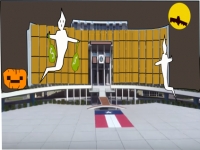
This is no fiction. The reality is an Executive Mansion once magnificent and idyllic, the heartbeat of the Liberian State, has now earned the dubious reputation as an abode where Presidents do not end well. And now, others ostensibly do not want to dare fate. So great is the infamy that reports of the place being both haunted and jinxed have made it on the pages of The New York Times. Here, however, we will spare ourselves the spooky details of the Executive Mansion to hone in on an equally, or even more, critical piece of the intricate puzzle: how over a period of just under 15 years, this “haunted house” has swallowed up millions in taxpayers money with zilch results. Budgets after budgets with nothing to be seen. If you thought the haunted tale is by itself intriguing, float with us into the ghostly budget ride below.
For nearly two decades, the Liberian Presidency has been displaced. It began on the Independence Day Celebration of 2006 (July 26) when the fourth floor of the Mansion burst into flames. While many believed that the fire was a result of an arson attack, Forensic investigators blamed the cause of the fire on electrical fault. The Mansion has remained unoccupied ever since with the Presidency taking refuge at the nearby Ministry of Foreign Affairs. In the wake of the incident, extensive renovation works commenced to restore the presidential palace to a status befitting of the Chief Executive. Fifteen years later, repair works are yet to be completed despite huge financing, and the project is likely to be recorded as the most expensive renovation in all of Liberian history. And West Africa? Who knows? Evidence available to us indicate that a jaw-dropping Forty-Two Million Nine Hundred Ninety-Five Thousand Two Hundred Seventeen United Sates Dollars and Twenty-One Cents (US$42,995,217.21) have been spent on the renovation from 2006 to present. With Four Million Dollars (US$4,000,000) proposed in the 2022 draft budget and Five Million Seven Hundred Sixty-Thousand United States Dollars (US$5,760,000) projected to be spent in 2023 and 2024, the cost of the project can properly be placed at Fifty-Two Million Seven Hundred Fifty-Five Thousand Two-Hundred Seventeen Dollars and Twenty-One Cents (US$52,755,217.21) holding all factors constant. This amount comes very close to what was used to construct the Ministerial Complex in Congo Town.
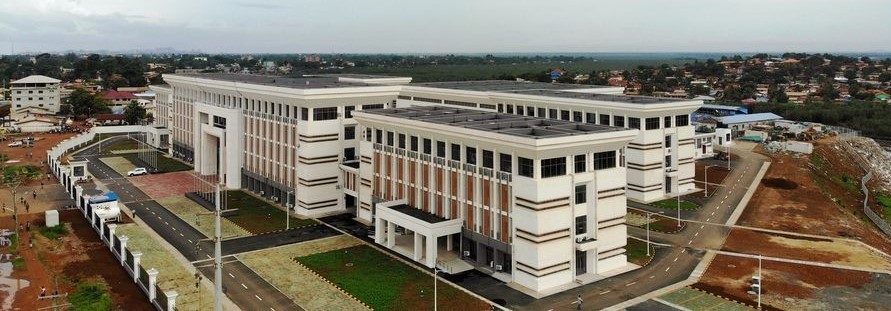
The Ministerial Complex constructed by the Chinese is a modern office complex that can accommodate 1,300 people for 6 ministries including the Ministry of Education, Ministry of Agriculture, Ministry of Labor, Ministry of Commerce and Industry, Civil Service Agency, and the Ministry of Gender, Children, and Social Protection. Credit: Xinhua
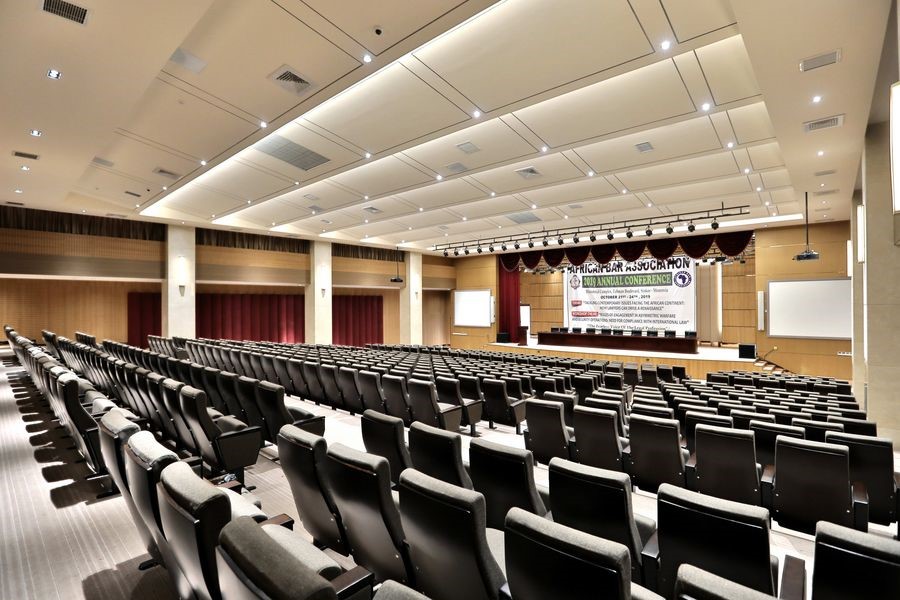
Inside the building, there is a multi-function hall for 400 people and a large conference hall for 500 people, as well as related sets of facilities. The project commenced on 25 October 2016 and was completed on 24 April 2019. Credit: Xinhua
US$53 million was used to build the entire Ministerial Complex from ground up. Strangely, similar amount is being spent on renovating the Executive Mansion alone. Something just doesn’t seem right. One quickly finds upon deeper inspection that monies reported to have been spent on the mansion didn’t really end up there. But while we can be certain that the monies did not hit the renovation, concluding on where they landed is not as easy. In early 2016, former Liberian President Ellen Johnson-Sirleaf requested the General Auditing Commission (GAC) to conduct an audit into the Executive Mansion renovation project. Several irregularities were discovered. The renovation was supervised by the Ministry of State and not the Ministry of Public Works which is the statutory body responsible for the construction and renovation of public buildings. The Ministry of Public Works initially supervised construction of the Mansion in 1960. It was further observed that the Ministry of State for Presidential Affairs did not provide supporting documentation for over 5 Million United States Dollars expended for the fiscal years 2012-2014. Additionally, Payments were made to the contractor, CNQC Qingjian International, without evidence of the reports and certificates of completion. Questionable payments were also made to other contractors associated with the project. Further, the Procurement Committee of the Ministry of State was not involved with the contracting process.
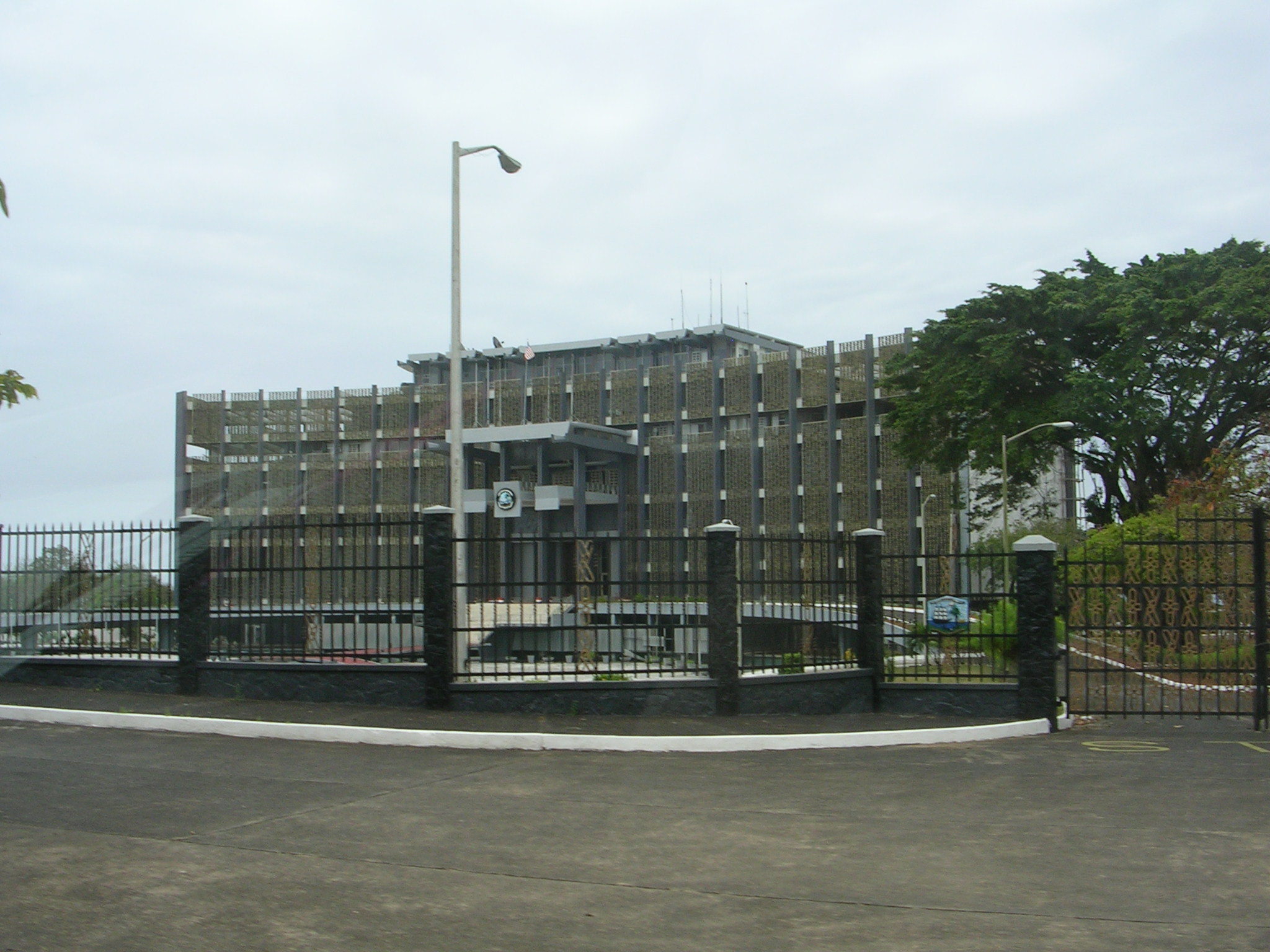
The Executive Mansion has been undergoing renovations for nearly two decades.
On July 1, 2015, after paying over 10 Million United States Dollars to the contractor CNQC, the Government of Liberia and CNQC Qingjian International executed an MOU which terminated the Executive Mansion Renovation Project contract. Additionally, the Government and Qingjian International waived all claims against each other in the interest of “diplomatic harmony”. Further details of the MOU remain undisclosed. Meanwhile, the waiver meant that the company was absolved of any and all liability or damages arising out of the contract. The Government of Liberia ought to have known, in the first place, that engaging the services of the Chinese state-owned company invariably draws China into the picture and that same would have presented great difficulties for contract management. And yes, it did. Or was hiring the company a deliberate attempt to shield misuse of public funds? In the end, millions of Liberian tax dollars were wasted and remain unaccounted for.
Many have been left staggered over the waste, impunity, and unproductiveness associated with the marathon renovation. As if the GAC audit report on the project was not enough, a committee dubbed Special Presidential Task Force with Cllr. J. Fonati Kofa (then Minister of State without portfolio and now Deputy Speaker of the House of Representatives) as Chairman was mandated to investigate. The investigation report was submitted to former President Ellen Johnson-Sirleaf on June 21, 2017. Details have not been made public and, yet, no one held accountable. Another committee was setup in September 2019, this time by the House of Representatives. The Committee disclosed that it was in receipt of the Kofa Report and found it to be “quite revealing and informative”. But the Committee also seems to be headed nowhere. In May this year, the Committee recommended that Samuel D. Tweah, Minister of Finance and Development Planning, be summoned by the Plenary to explain his refusal, for nearly two years, to provide information requested. There is no record that Minister Tweah was either summoned or held in contempt. Indeed, the third investigation in the matter is set to fail. Representative Vincent S.T. Willie of Grand Bassa county had requested the House to setup a Special Committee to probe the project. In his communication to the House, he described the project as a “political dragon that is eating the Liberian people’s money”. But the Special Committee has made some interesting finds. It says that CNQC lacked the qualification and experience to carryout the renovation, and that when its contract was terminated, CESAF Liberia Ltd was hired at a cost of US$ 50,522,521.61. For the second time, the contract is not managed by the Ministry of Public Works. Rather, the contract is “controlled by the Ministry of Finance”. The Committee also observed that between December 2018 and May 2019, the Weah government paid CESAF Liberia Ltd. the sum of 8.9 million United States Dollars (Eight Million Nine Hundred Thousand United States Dollars), and that there is no evidence that CESAF Liberia Ltd. had done any appreciable work. With all these findings, however, there is no record that the House acted on the recommendation of the Committee to summon the Minister of Finance to answer questions. All signs point glaringly to the failure of yet another investigation into the mystery surrounding funds spent on the project.
On November 30, 2021, an array of Government officials led by President George M. Weah visited the site to inspect on-going works. There was no mention by any of the Senior officials, making remarks, of accountability for funds spent on the project. The Weah administration looks set to claim credit for renovation of the Mansion. But will it muster the courage to go after the wasted millions? Does it even matter at all? Or does investigation and prosecution of misuse of funds meant for the Mansion attract unfavorable consequences? Or did the funds get taken away by ghosts that reportedly roam the presidential palace? Oops…I forgot. If the Mansion is haunted, as is reported, then we may just need our own Ghostbusters to banish the ghosts and break the curse. But until then, we must make use of what we have by ensuring that investigative reports related to the quagmire are treated with utmost importance and deserved attention. We cannot rejoice in the completion of the mansion with millions of dollars lost. A true celebration can only happen the lost millions are found and those liable are penalized.
…Bomi and Gbarpolu in Focus
By: Sam Z. Zota, Jr.
The County Social Development Fund (CSDF) was established as part of the Government’s commitment to ensuring that the following objectives are achieved: ensure that funds allocated to counties are properly managed, accounted for, and applied in accordance with the County Development Plan; full participation of local inhabitants in the planning, development, and implementation of the CSDF; minimize the direct political influence in the management and implementation of the CSDF; and ensure value for public funds allotted to the counties as CSDF, (CSDF Act of 2018).
Despite these well-crafted objectives outlined in the CSDF Act of 2018, citizens in seven (7) of Liberia’s fifteen (15) counties feel left out of the process, especially in terms of transparency and accountability in the implementation of funds allocated to their respective communities.
Every year, the Law provides for the holding of County Council Sitting to decide on funds allocations to their respective counties. The implementations of projects decided in the County Council Sitting are carryout by the Project Management Committees (PMCs), usually elected by delegates to the Council Sittings.
“When they came here to renovate this building (the Suehn Mecca Statutory District Administrative Building), we asked the contractor to provide information to us about what exactly he will be doing and who sent him. He insulted us and said we were half-educated so he cannot give us any answer, so, we left them to do whatever they wanted,” said Sieh Momodu Domago, Township Commissioner, Cooper Town, Suehn Mecca District, Bomi County.
The renovation of the Suehn Mecca Statutory District Administrative Building in Cooper Town, Bomi County costs Twenty-Seven Thousand Two-Hundred Ninety-Seven United States Dollars ($27,297.00). Citizens have blamed direct political influences in project implementations and lack of transparency for the continuous disrespect shown to local inhabitants and their leaders by contractors in the counties.
It is reported that most of the contractors hired to implement projects in the communities were either owned by local county authorities or influential politicians in the country. As a result of lack of access to information, citizens still remain doubtful of the sources of funds (CSDF, Legislative Support Projects, and politicians’ personal initiatives) for projects in their communities.
Some CSDF funded projects are claimed by politicians as their personal initiatives, like the water towers and modern latrine projects in the Gbalasuah Community in Tubmanburg, where the former Representative of Bomi County District #1, S. Gayah Karmo is believed to have constructed them as his personal initiative for the community.
“Just a few people using the toilet right now. After the lawmaker (former Rep. Karmo) finished the project, the people came overnight and stole the machine that supposed to pump water to the reservoir to be used to flush the toilet and for the shower,” said Fatu Kamara, a resident of the Gbalasuah Community in Tubmanburg.
According to the report from the Bomi County Project Management Committee (PMC), in 2017, the constructions of three (3) modern latrines in three (3) communities; four (4) water towels and four (4) 5.5KVA generators in Gbalasuah; Vai Town; Harmon Hill and Kondeh Communities cost ninety-nine thousand eight hundred and eight dollars thirty-six cent (US$99,808.36) from the CSDF.
“When they (Contractors) come to do a project in the community, they usually tell us that they were sent by the big-big people (people in authority) to develop our community and, they’re the ones they can report to, not us (community dwellers),” Vashti Seh, a resident of the Bahar Community in Tubmanburg said.
In some communities, the contractors even demanded community dwellers to contribute local materials for the construction of structures that have been costed and paid for.
In Gbarpolu County, the Town Chief of Gbarquoita, Habakkuk M. Jallah said in 2017, the youth of the town were asked to produce all local materials (sand, sticks, rocks, etc.) for the construction of a clinic in the area. Since its construction nearly four years ago, the Gbarquoita Clinic is yet to serve the town with a population of over 2000 inhabitants.
Patients, including women in labour either walk or are transported in hammock for over three hours from the town to Bopolu City to access treatment. The structure is in ruins with bush overtaking it. Residents are becoming reluctant to continuously cutting grass and cleaning a structure that’s yet to become beneficial to them. The Gbarpolu County Project Management Committee (PMC) captured the Gbarquoita Clinic in its report as one of the projects funded by the CSDF, though the cost of the abandoned Clinic construction is not seen in the report.
Like the Gbarquoita Clinic, the Youth Center constructed in Bopolu City with the CSDF is also in ruins, grass has overtaken the entire structure. A total of sixty-thousand nine-hundred and fifty-six dollars ninety-one cent (US$60,956.91) was spent so far for the Youth Center construction.
The two PMCs reports (Bomi and Gbarpolu Counties) associate high costs for different projects that appeared to be unrealistic and don’t seem to match with the physical structures that are either completed or still in progress.
At the Macca Clinic in Mulbah Town in Bomi County, US$50,000.00 was said to have been spent for the construction of a set of three one-bed-room unfurnished apartments as Nurses’ Quarter. The tiling of the floors in the apartments are yet to be completed, while in Gbarpolu County, over two-hundred thousand United States Dollars (US200,000.00) was said to have been spent on the Bopolu City electrification and layout projects that are yet to be completed. The Clinic has nine (9) staff, but only three of the nine (9) are residing in the Quarter.
Citizens still do not feel the impacts of the CSDFs in their counties. Project implementations in the counties are reportedly marred by a lack of participation, transparency, and accountability.
Aligned with the Sustainable Development Goals (SDGs), the CSDF mechanism presents an opportunity for citizens to engage and influence development agendas at the county levels. It is also a crucial local instrument that supports the CDC-led Government’s Pro-poor Agenda for Prosperity and Development (PAPD) which among other things, seeks to reduce poverty and increase efforts to address inequality.
As part of the government decentralization process, the CSDF empowers citizens in their respective counties throughout the 15 subdivisions of Liberia to decide the use of two-hundred thousand United States dollars (200,000.00USD) allotted in the national budget; to ensure that growth spreads to rural Liberia through county-driven development. But, according to the General Auditing Commission (GAC), the CSDF implementations have been marred by several discrepancies and unorthodox financial practices over the years.
To address the abuse and mismanagement of public resources and ensure accountable and impact-driven citizens-led development across Liberia, citizens believe that the Government of Liberia must ensure that the impartial implementation and enforcement of audit findings and recommendations by unbiasedly prosecuting people found liable for corruption.
…The Story of the Mulbah Town Public School in Bomi County
-By Sam Z. Zota, Jr.
Marvee Kamara is the Principal while Mabudu K. Folley serves as the Vice Principal for Instruction (VPI). But the two men double as teachers for the one-hundred and nine (109) students at the Mulbah Town Public School, an elementary school in Bomi County. The number of students is likely to increase as registration is still ongoing. The school has an enrolment record of between one-sixty (160) to two hundred (200) students per semester.
While Mabudu who also serves as registrar is in charge of the Early Childhood Education (ECE), Marvee is busy from class to class, assigning daily lessons to students from grades one to six. The same is repeated during the administration of tests for the students.
“What we do here is, when I give lesson to the first graders, I move to the next class and do the same, and when I finish giving lesson to all the classes, I go back in the same order to start explaining the lesson,” said Marvee. The school runs from 8am to 1 pm. The utter disregard for place in assigning instructors and prioritizing needs could most likely serve as a contributing factor for this dreadful situation. The “one size fits all” approach that identifies a set of rules and ignores differences from place has affected education in rural Liberia.
As if having only two instructors is not enough, supplies allocated to the school to enhance the learning process are also inadequate. The school receives two boxes of chalks as supplies from the Ministry of Education through the office of the District Education Officer (DEO) yearly.
Marvee cited the lack of instructors and educational supplies as the major challenges confronting the school. Except for the latrine, the school edifice was recently painted through a school grant from the Global Partnership for Education (GPE). The GPE grant is usually disbursed by two installments at 60 and 40 percent. The total expected grant for the Mulbah Town Public School is eight-hundred United States dollars ($800USD) for the semester 2021/2022. The Mulbah Town Public School was constructed in 2017 at a cost of One Hundred and Ten Thousand United States Dollars (US$ 110,000.00) as one of the many projects implemented with the CSDF received from 2013-2017.
The situation is not unique to the Mulbah Town Public School, as most public schools across Liberia are faced with similar, some even worse, situations with students sitting on the floor to acquire education, a basic human right. Despite this, the Ministry of Education has been on a campaign massively retiring teachers.
The Education Reform Act of 2011 obligates the Government to providing and ensuring access to, and increasing availability of high quality educational opportunities for all citizens and residents without prejudice. Unfortunately, the pace to achieving the Education Reform Act is rather slow.
More...

By: Atty. Isaac F. Nyantte, Jr.
CENTAL has an Advocacy and Legal Advice Center (ALAC), where cases bordering on corruption and other unwholesome practices are reported. One of such cases involved an instructor at a school in Monrovia, who attempted to have an affair with a female student as a pre-condition for returning her telephone that was seized by him. He had asked the student to retrieve the phone from his house. But the student did not go alone. She was accompanied by a friend. This had the teacher upset as the presence of the friend worked to abort plans of the affair. He did not give the phone to the student as promised. The student’s mother, being upset by the instructor’s action, proceeded to the campus and forcibly retrieved the phone from the school. Sadly, the student was expelled by the School on the basis of her mother’s conduct.
This matter was brought to CENTAL’s ALAC, which then intervened to ensure that the girl returns to school. Yet, the school remain adamant. It would not even give the girl her documents to enable her enroll in another school. ALAC referred the matter to the Ministry of Education (MoE) and remained engaged with the investigation. The MoE established that the school’s action was arbitrary and not in conformity with law, instructed the school to re-instate the girl. Nonetheless, because of the toxicity associated with the school, the girl opted to enroll in another school. All necessary documents were then given to her. The school is yet to take action against the teacher. This is yet another classic example of how women are subjected to different forms of violence every day.
Gender-based violence is not only an issue widely seen in Liberia, it is common in many societies due to societal structures, crisis, or breakdown of law and order. This was widely seen during the heat of the Liberian crisis, when violence was used as a weapon of war to enslave women.
For many young girls and women, this situation which occurred during the war days, still continues today, with families concealing the information for fear that their girl child would become stigmatized by society. The UNHCR Liberia Factsheet January – December 2019, reported that Rape remains the most reported form of gender-based violence reported in Liberia. According to the report, 46% of cases under investigation by the Liberia National Police during the period concerned children under the age of 18years. Another form of violence, sexual extortion or sextortion, which is a form of corruption, is also occurring in the Liberian society. According to CENTAL’s State of Corruption Report (SCORE) 2021, 12% of Liberians witnessed sextortion during the year preceding the survey. This is a significant number especially considering the veil of secrecy, culture of silence, and backlash of stigma that tend to be associated sextortion. In other words, the extent to which the menace is occurring is possibly greater though it might not be public for many to see.
During the civil war, the perpetrators were mainly rebel forces. However, after the conflict the perpetrators include not just ex-combatants, but community or family members, teachers, husbands or partners. GBV does not only lead to physical and mental trauma for the victim. It often carries longer-term social consequences for the victims themselves, such as stigmatization by their families and the community. Around 15 percent of those who were raped ended up getting pregnant. A high rate of divorce and wife abandonment often follow.
Reports from the Ministry of Gender and Development in 2008 show a similar trend: 34 percent out of over 10,000 reported protection incidents are GBV related. Domestic violence is the most prevalent of all protection incidents (26 percent out of all reported cases).
Taking a cursory look at the relationship between gender and corruption, studies show the relationship between the women in positions of power in countries around the globe, with emphasis on anti- corruption measures in place, to that of the opposite gender. Findings show that with more women in power, there were less forms of corruption. Gender as viewed from different cultures, influence the lives of men and women in different ways.
In many typical African societies, women are limited to domestic work and are regularly confronted with corruption when dealing with education, health and other public services. According to a UNODC Report titled” The time is now” Addressing the gender dimensions of Corruption, and published in 2020, In the health care sector, women are particularly vulnerable as they have reproductive health needs that may require regular attention. They can face corruption for things as simple as getting appointments to having to pay for treatment that they should have received for free. On a daily basis in Liberia, at different health facilities , women have to pay unjustified fees after having to go through so much procedure, only to get medical treatment. A network dominated by men, whether in the public or private sectors, works at the exclusion of women, so that they don’t have access to some cardinal information, or political space.
On the other hand, women in leadership roles have been shown to be more motivated and invested in addressing aspects of corruption that are closer to their own reality, i.e. in areas such as public service delivery of health care and education. They may also be more interested in addressing the gendered currency of corruption, namely where women are asked for sexual favours to access services that are, in fact, sometimes even free.
In conclusion, a preventive strategy targeting men and women that strives for knowledge, attitudinal and behavioral change, by raising awareness of SGBV across all these pillars remains cardinal, especially as we commemorate 16 days of activism. This must involve a mix of advocacy and public awareness campaigns using various media at the community, county and national level.
Liberia: Gender and Corruption
By: Sam Z. Zota, Jr.
Corruption is defined as the abuse of entrusted power for private gain. It erodes trust, and exacerbates inequality, poverty, social division and the environmental crisis.[i] It also affects different genders, leaving marginalized groups mostly impacted. Women, youths, and the poor are often victims.
International organizations have identified four (4) intertwined areas in which women are subjected to corruption: (i) when accessing basic services, markets, and credit; (ii) while engaging in politics; (iii) in situations where women’s rights are violated (e.g., trafficking and sexual extortion); and (iv) negligence and/or mismanagement – where women report poor service delivery due to failure of leaders to hold accountable subordinates engaging in corruption.[ii]
According to the SIDA Gender Tool Box 2015, corruption in public service delivery affects women disproportionately more than men due to the higher vulnerability of women living in poverty and being responsible for the care of children and elderly. Women in some phases of life also have greater needs for health services, especially in their reproductive years. They require access to health care before and during pregnancy and after delivery. In these situations, women may be subjected to corruption, for example in the form of bribery, by health service providers at different stages of their health care needs. The State of Corruption Report (SCORE) 2021 released by the Center for Transparency and Accountability in Liberia (CENTAL) indicates that Sixty-five (65%) of females rated medical services as the service most prone to corruption. According to the report, Corruption in the health sector intensifies inequality, with poor people and other marginalized groups being hit the hardest. The SCORE further indicated that there remains a proliferation of fake and expired drugs on the market (Liberia Revenue Authority, 2020), with long queues at hospitals, inadequacy of hospital beds, shortage of medical supplies, and below par attention from caregivers affect bribe payments as patients seek medical care. At some public facilities, in addition to the cost of services, patients shoulder operational expenses such as electricity costs (CENTAL, 2021). And in the midst of these lapses, those in charge of regulating the sector have been implicated in corruption and self-dealing.
Furthermore, corruption shrinks public revenue, often cutting spending on education, healthcare, family benefits and other social services. This seriously undermines the welfare of women and children who rely mostly on such services provided by the state (SIDA Gender Tool Box, 2015). Recently, Foreign Minister Maxwell Kemayah admitted that a “black market” at the Ministry of Foreign Affairs has been responsible for hike in fees for services and failing to have collections reported to government revenue (The New Dawn, 2021). Not only is such dubious activity shrinking revenue, it is also hindering access to passport services.
The SCORE 2021 also found that Liberia’s national budget has been used as a tool to promote corruption. “State resources are being dispensed through the budget as a reward for political support. The national budget is also being used as a tool to foster what can only be called, however oxymoronically, legalized corruption”, the report stated.
Studies show that there is a broad consensus that corruption hits the poor and vulnerable groups the hardest, especially women, who represent a higher share of the world’s poor. Corruption also hinders progress towards gender equality and presents a barrier for women to gain full access to their civic, social and economic rights. In societies, like Liberia where women are traditionally the primary caretakers for their families, they are often dependent on public services like health or education. This makes them more vulnerable to certain types of bribery at the point of service delivery.[iii]
For women and girls to get access to basic services (education, health, water, sanitation, and electricity), documentation (licenses, residence and identity cards), and law enforcement, they may not only be forced to pay bribe, but are also exposed to sexual extortion. These acts often go unreported due to the stigma and shame associated with sexual crimes. This makes it difficult to monitor the nature and frequency of such corrupt practices. According to the SCORE 2021, 12 percent of Liberians indicated that they witnessed sextortion over the last 12 months. In this type of corruption, sex becomes the currency of the bribe and people are coerced into engaging in sexual acts in exchange for essential services, including health care and education.[iv]
Understanding the complex relationship between gender and corruption is therefore an essential step towards furthering women’s rights and eventually levelling the playing field between women and men.
Today, it is recognized that gender aspects influence and shape cultures across the world and feature in diverse areas of lives, ranging from religious teachings to the common bedtime story. Building upon this universality, corruption affects men and women differently across the world. In many societies as Liberia, women remain the primary caretakers of the family and are regularly confronted with corruption when providing these services. The reproductive needs of women make them particularly vulnerable in the health care sector.
But women are not only victims of corruption; they are also part of the solution. While evidence is inconclusive on whether women are less corrupt than men, greater women’s rights and participation in public life are associated with better governance and lower levels of corruption in many countries of the world. Empowering women and promoting their participation in public life is essential to address the gendered impacts of corruption and level gender power imbalances and inequalities.
Gender inequality interferes with women’s ability to advance at all levels of politics and decision-making, thereby obstructing their access to political participation. Corruption also disrupts efforts to combat different forms of violations against women. Corruption tampers with justice systems and makes it difficult to drastically deal the violence against women. Perpetrators of violence against women continue to walk-away with impunity thereby undermining efforts to stem down on the crime.
Despite all odds, women still remain a part of the solution and have an important role to play in anti-corruption campaigns. They can contribute to improve accountability and integrity systems and build governance frameworks that are more responsive to their needs. Involving women in public life, including but not limited to anti-corruption and the design of gender responsive and gender sensitive anti-corruption policies is an important step in this direction. Indeed, we must all join hands to end all forms of violence against our women and girls now. Yes, we can; working together as ‘One People, One Nation and One Destiny!
[i] What is corruption? - Transparency.org
[ii] https://cdn.sida.se/publications/files/-gender-and-corruption.pdf
[iii] https://www.transparency.org/en/our-priorities/gender-and-corruption.
[iv] https://www.transparency.org/en/our-priorities/gender-and-corruption.
Poor Planning Results in Wasted Public Funds and Unused NTA Terminals in Three Counties
Super UserBy: Sampson David
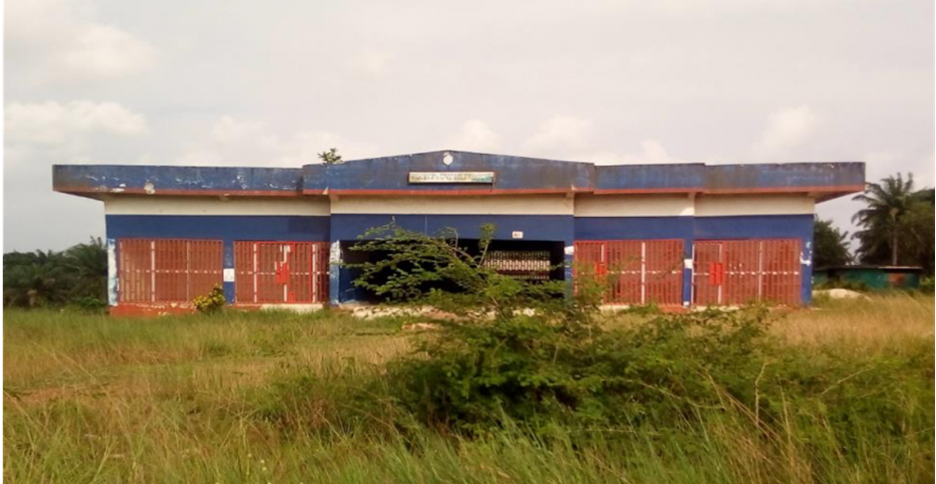
BUCHANAN Grand Bassa – Liberians in three counties – Bong, Margibi, and Grand Bassa – have expressed grave concern over the abandonment of bus terminals by the National Transit Authority.
Citizens have complained that although the NTA terminals in Buchanan, Grand Bassa and Gbarnga, Bong have been completed, they were abandoned by the transit agency. Meanwhile, construction of a terminal in Kakata, Margibi remains stalled, eight years since the project began.
Previously known as the Monrovia Transit Authority, the NTA was transformed into a nationwide transportation system by an act of the legislature in 2009.
In April 2013, the agency began constructing Buchanan’s terminal through a private construction firm, Dougbor Group Incorporated, for US$97,219. The construction was completed and the terminal turned over to the NTA, but it remains unused.
Although NTA buses frequent the Buchanan to Monrovia route, passengers alight and board the buses at different locations along the streets of Buchanan instead of using the terminal. This happens even during heavy rainstorms, from which the terminal was designed to shelter passengers.
One reason the Buchanan terminal has never been used is the lack of proper planning and public consultation in selecting the location. Barley Tokpah, head of the local chapter of the National Civil Society Council of Liberia, said the terminal’s location is unsafe and not easily accessible.
Tokpah elaborated that the terminal’s location within the On Your Own Community, as opposed to a central and well-lit neighborhood, makes it an unsafe destination for passengers wishing to take trips during the early morning and late evening hours. The road to the terminal is far, dark, and isolated – all conditions that encourage criminal activities and attacks on them, Tokpah said.
He added that the decision of the terminal’s location was likely based more on where the government already had available land, instead of where was most suitable for a terminal that connected passengers from across Buchanan.
“From government to government, we’ve lack consultations at the local level,” he said. “Now that the road is not paved, [there’s] no electricity, and the building has been abandoned, I can say that it was not appropriate to build it there, taking into consideration the prevailing circumstances.”
He called on the NTA management to take responsibility of the situation because they did not conduct the required assessments before constructing the terminal.
Emmanuel Wragboe, a Buchanan resident, recommends that the heads of the agency who initiated the terminal project be made to pay for the taxpayer funds they wasted.
“This is [a] waste of taxpayers’ money,” he said. “If you are carrying development somewhere, you need to send your assessment team to do an investigation as to whether the place you want to do the development will be conducive for the people.”
Like the Buchanan terminal, the Gbarnga NTA terminal that was constructed under former managing director Karmo Ville’s administration is not being used. Bong County Youth Coordinator Dakai Mulbah described the abandoned terminal as a waste of public funds and blamed poor planning.
“The government used a lot of public resources to build this terminal, and it has been abandoned by the NTA itself and the citizens – it is a complete waste of public funds,” Mulbah said.
“The government cannot be spending a lot of money on something that is not conducive for the people. Now you see the people sitting under the rain, sun, and on the road awaiting car – it is wrong.”
The Gbarnga terminal is located on the Lofa highway, a significant distance from the center of the Bong capital.
“If the citizens were involved, they couldn’t have allowed the terminal to be built in that area,” Mulbah noted. “If you want to carry out development for a group of people, involve them. Anything that is not done properly is not done at all.”
Mulbah laments that so much government resources were wasted on buildings that would never be used: “That money should have been used on something different that would have improved the lives of the people.”
Meanwhile, in Margibi, residents still wait in the rain and scorching sun to board NTA buses. The construction of an NTA terminal has remained stalled for years.
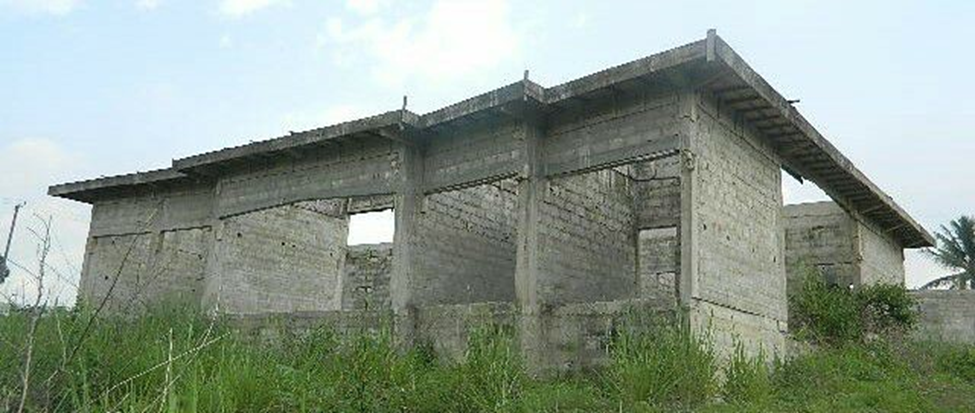
Kakata NTA Terminal under construction. Photo by Yawah Jaivey
In 2013, construction of the Kakata terminal began but was interrupted during the 2014 Ebola outbreak. Seven years later, the project has remained on hold even though Ebola was eradicated from Liberia in 2015. The Dougbor Construction Company, which constructed the Buchanan terminal, also won the bid for the terminal in Kakata that was funded by the National Oil Company of Liberia, NOCAL.
In 2017, NTA’s then public affairs officer, Robert Wilson, told The Bush Chicken that the oil company agreed to fund the construction of terminals in Kakata and Bo, Grand Cape Mount.
The head of Margibi’s chapter of the National Civil society Council of Liberia, Friday Cursor, says he is concerned about the unexplained delay in the construction of the terminal.
NTA’s managing director, Herbie Teconbla McCauley, has turned down a request for a face-to-face interview to respond to concerns of abandonment of the terminals in the counties. Via text message, he blamed COVID-19 for the construction delay.
“Due to COVID, our partners that [are] supposed to carry [on] the project [have] been unable to because of the travel restrictions in China. However, as soon as things improve around the world we can assure our customers those projects will be undertaken,” he wrote.
McCauley refused to address the abandonment of already completed terminals. However, in 2018, the agency’s then corporate communications officer, Jimmy Tybalt, who is now operations manager, admitted in an interview that NTA had abandoned the terminal in Buchanan. Still, he blamed Ville, the former managing director, for authorizing the project. He told The Bush Chicken that the current administration would decide on the way forward.
This story was earlier published on the Bush Chicken and is a collaboration with the Center for Transparency and Accountability in Liberia (CENTAL) as part of the Ant-Corruption and Investigative Journalism Fellowship with founding from Sweden Sverige. The sponsor has no input in the story and the story does not necessarily reflect her views.
Featured photo by Sampson David
Corruption in Rivercess: What’s Behind 'The Bridge that Never Is'?
Super UserBy: Gabriel B. Sawah
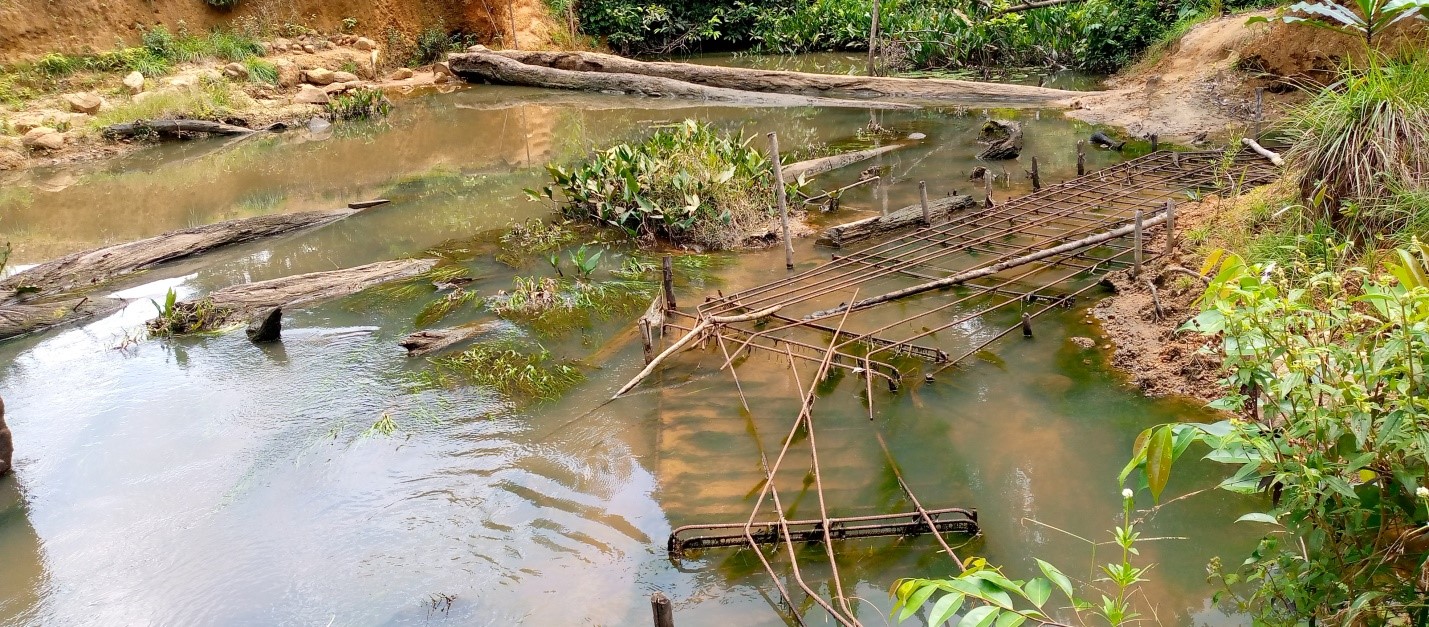
Current status of the Draw River Bridge Project in Zahnflahn Administrative District
This is the Draw River. Located near Zorh Town, River Cess, the river is calm and shallow in the dry. But when the rains come, it deepens and overflows. The community has been bedeviled by this seasonal challenge for many years and has intensely hoped for a lasting solution. The community would take a giant step towards the construction of a bridge but once public officials got involved, politics and corruption surfaced. The Bridge is yet to be.
Meet Comfort Gardehway, a 27-year-old mother of two residing in Wholozohn Clan, Zarflahn Administrative District, River Cess County. Like many of her peers, she worries about her children’s education as the raining season intensifies. According to her, most kids (hers included) are unable to attend school when the Draw River overflows.
She says that when the river overflows during the rains, women in labor often have to wait for days to make the crossing or, alternatively, are carried in hammocks to nearby health facilities. “Some even give birth at the riverside and are attended to by traditional midwives”, she added.
Due to these and many other challenges, the community decided to construct a bridge. Thanks to land rental fees paid by the EJ&J Logging Company for carrying out commercial logging operations in the community forest.
In 2019, the community, through its Community Forestry Development Committee (CFDC), entered an agreement with LIDA (Liberia) Limited for the construction of a bridge valued at One hundred and Six Thousand United States Dollars (US$106,000). Of this amount, Thirty-Five Thousand United States Dollars (US$35,000) was to be provided by the CFDC and the remaining amount was to be sourced from the County Social Development Funds (CSDF) through a County Sitting resolution. The agreement was signed by the CFDC Chairperson Mathew Walley, then Legislative Caucus Chairperson Senator Dallas A.V. Gueh, Project Management Committee Chairperson Romeo Alphonso Kebbeh, Fiscal Affairs Superintendent Cyrus Elijah Kaysaynee and the Chief Executive Officer of LIDA (Liberia) Limited Marshall David Yeanue.
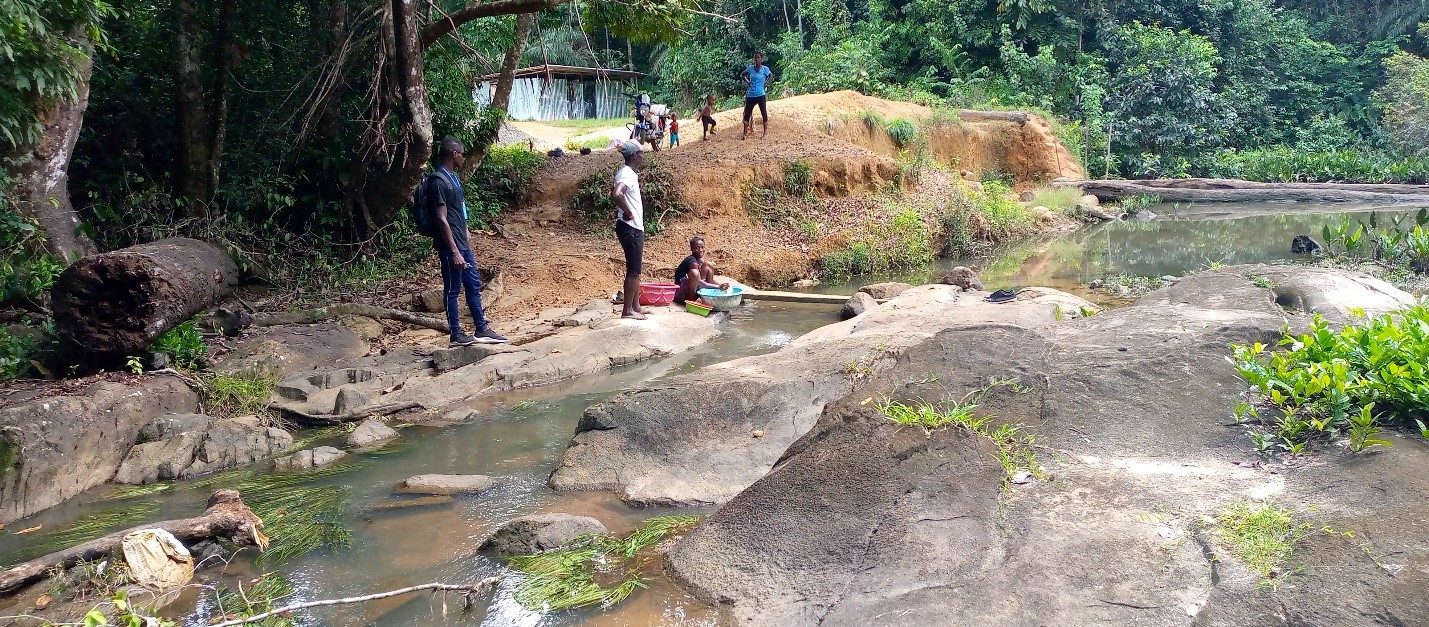
View of the construction site
But two years later, the bridge project has barely begun. This has created a Pandora box as many wonder who is really telling the truth. Accusing fingers have been pointed from one end to another. County officials have said that the contractor (LIDA) brought in substandard materials, something which prompted them to issue a stay order on the construction. On the other hand, the head of the CFDC, Mathew Walley, has attributed the stalemate to the fact that county officials received money from the contractor, coupled with officials’ refusal to disburse the CSDF share of the project cost.
“The Development Superintendent Amos Somah halted the construction work because he said the contractors were using low quality materials, but when we went there for verification, the Development Superintendent only identified the steel rod on grounds that the steel should have been 16mm instead of the 14mm that was used”, Walley of the CDFC said. But Walley himself has been accused of selling materials procured for the project. When confronted, Walley claimed that 100 bags of cement were given out to a business as a safeguard and would be replaced. When quizzed, this is how he responded: “so if we took it out for safety, is that not sufficient? I told you that the business that used it is waiting to replace it. What next will you ask? What I want you to do as an investigative journalist is to find out what is holding the bridge now? Why has the project delayed? What is the responsibility of the parties?”, he responded to our inquiry.
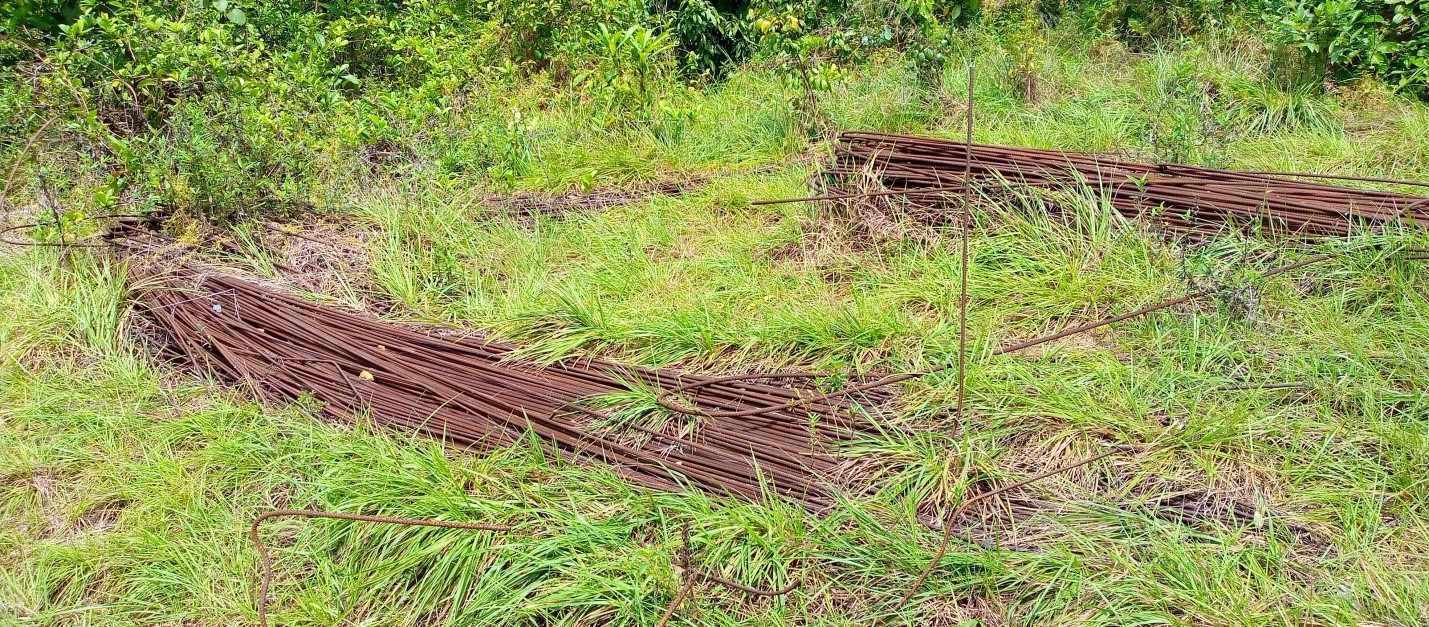
Steel rods brought in by the company lie exposed at the project site
On March 19, 2021 a group under the banner Concerned Citizens Movement of Wholozohn Clan filed a complaint against Mathew Walley, head of the CFDC, to the 14th Judicial Circuit Court for River Cess County demanding answers about why the project has not resumed although materials are available at the project site.
Based on the group’s complaint, the court on April 5, 2021 cited the contractor (LIDA) through its Chief Executive Officer, Mr. Marshall David Yeanue, Mathew Walley of the CFDC and Development Superintendent Amos Somah to appear and show cause why construction works have not resumed. At the hearing, the contractor admitted receiving Thirty-Seven Thousand United States Dollars (37,000.00USD) from the CFDC instead of the initially agreed Thirty-five Thousand United States Dollars (35,000.00USD). The contractor assured the court of resuming work. Strangely, the contractor has recently argued that the contractual agreement placed the project duration at six business months and that since the duration has expired, work would not resume until County authorities compensate for damages encountered as the result of the stay order, which it says lacks technical basis.
A highly placed source who spoke to us on condition of anonymity said the stay order issued by Development Superintendent Amos Somah was motivated by personal interests. According to the source, Somah stopped the construction work because the Bid Evaluation Committee denied a construction firm, which he is linked to, the bridge construction contract. According to the source, Somah was also a member of the Bid Evaluation Committee and had attempted to turn the tide in favor of the company. However, other committee members resisted.
The source also hinted another reason for the inability of County officials to take actions against the seemingly daring contractor. According to the source, the contractor (LIDA) gave Six Thousand United States Dollars (6,000USD) to Development Superintendent Somah and Assistant Fiscal Affairs Superintendent Cyrus Elijah Kaysaynee as “credit” to facilitate holding of the 2019 county sitting. Our investigation also revealed that the money was delivered to the officials by the contractor after the community had made good its share of the cost for the Draw River Bridge Project. The amount was withdrawn from the Forestry Management Committee Area B(FMC-B) account by CFDC Chairperson Matthew Walley and was presented to Fiscal Affairs Superintendent Elijah Kaysaynee and Development Superintendent Amos Somah. A source closed to the transaction said the contractor had earlier told the County Officials that the money he was crediting the county was part of the project fund.
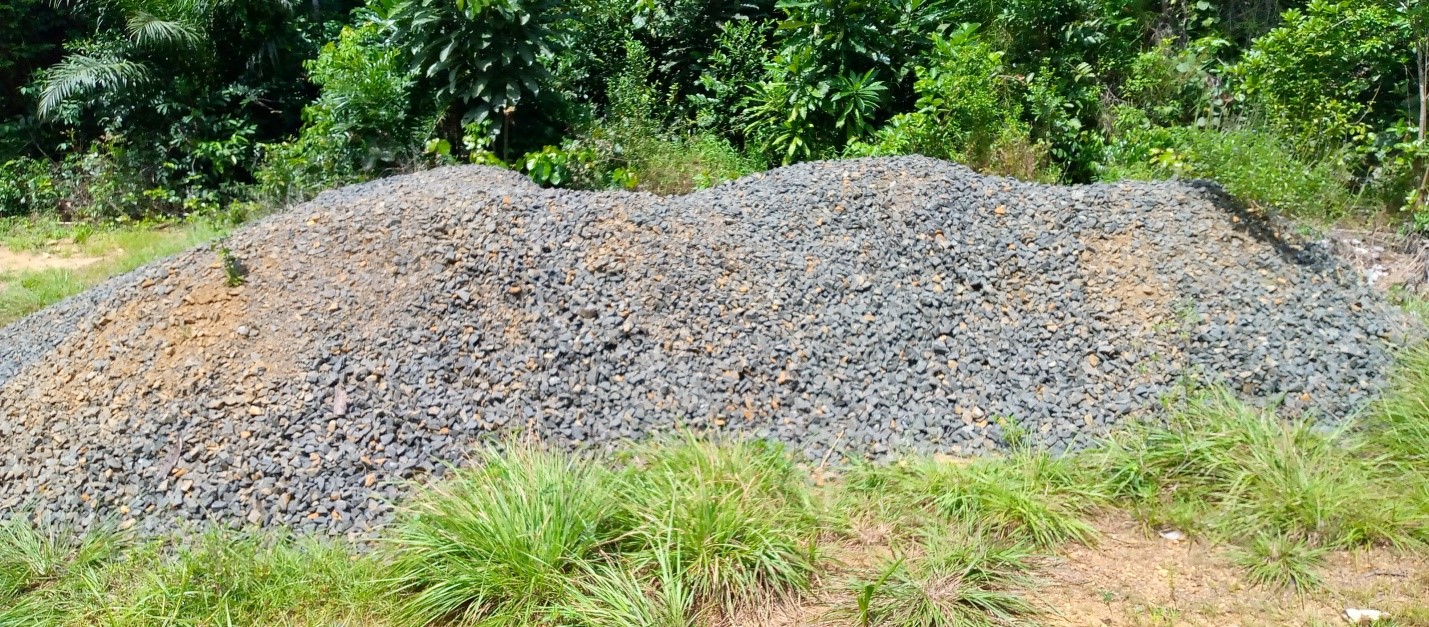
Crushed rocks deposited at the project site
When contacted, Fiscal Affairs Superintendent Elijah Kaysaynee denied receiving any money from the contractor for personal affairs but argued that the county credited money from FMC Area K not Area B.
“We took money from the FMC Area-K; we did not take money directly from Marshall Yeanue, but we took money from the CFDC with an agreement, not with Marshall” he reacted.
Meanwhile, River Cess Project Management Committee (PMC) Chairperson Remeo Alphonso Kebbeh has said that the disbursement of the Thirty-Five Thousand United States Dollars (USD$35,000) was done by the Fiscal Affairs Superintendent Elijah Kaysaynee and the CFDC chairman Mathew Walley without the PMC involvement.
“The Fiscal Affairs [Superintendent] called me before they give the money to the contractor and he came back to River Cess and told me they had the entire transaction document” he explained.
Development Superintendent Amos Somah says the county will not give LIDA a dime to continue the project; adding that neither the county nor the community is obligated to LIDA (Liberia) Limited. He said he halted the project because of the substandard materials and that Mathew Walley and Marshall Yeanue must be held accountable for the failure of the project. Sadly, these materials remain exposed at the project site and stand the risk of theft.
There are many questions that remain unanswered as the Draw River remains a nagging concern for locals. Patriotic sons and daughters of the county are wondering why the contractor (LIDA) alone will challenge the entire county and the leadership remains mute and inert. Aren’t county officials complicit and compromised by their “credit” of funds intended for the project? Is it not the responsibility of government to fund county sittings? Why is the CFDC which manages community forest revenues not taking any action? And why did the CFDC sell over 100 bags of cement intended for the project without the citizens concern? Plus where are the funds from the sale? Are communities being robbed by county officials of the little they have to benefit from extraction of their forest resources? These questions may remain unanswered now but, with growing citizens’ demand for accountability, the answers might just come sooner than expected. Meanwhile, we continue to hope that the Draw River Bridge project delivers an actual bridge rather than a bridge only on paper.
About the Author
Gabriel B. Sawah is a CENTAL Investigative Journalism Fellow and Manager at the Development Communication Network (DCN) Radio in Cestos, River Cess.
Editor: This article was edited by Gerald D. Yeakula, Esq., Program Manager at the Center for Transparency and Accountability in Liberia (CENTAL).
Editor’s Note: This article is made possible through the National Integrity Building and Anti-Corruption (NIBA) program implemented by CENTAL with funding from the Swedish International Development Cooperation Agency (SIDA) through the Embassy of Sweden. The donor has no input in the story and it does not necessarily reflect her views.
LOCATION
22nd Street, Sinkor
Tubman Boulevard
Monrovia, Liberia
Phone: +231 88 681 8855
Email: info@cental.org.lr
Website: www.cental.org.lr
SUBSCRIBE
Get updates and important events straight to your inbox. We don't spam