
Tracking Corruption Allegations
A look at the Corruption Case Tracker’s Role in the Fight against Corruption
By: Mark Boahndao
Before now, accessing information about allegations of corruption and their statuses in Liberia would require hours of surfing the internet. The need to have readily available, independent, up-to-date, and consolidated details about various corruption cases became blatant. The drawback presented by this dearth of data is that impunity flourished as persons accused of corruption moved around freely without actions taken against them. With accusations in Liberia rising and falling like ‘Coca-Cola’ bubbles, it became difficult for civil society and citizens to persist in demanding accountability for past allegations of corruption.
Also, LACC and other agencies or departments could hardly be monitored and engaged regarding the slow pace of investigations or outcome of cases since information on particular cases eluded many.
To support ongoing national efforts to address this pressing issue, CENTAL developed the Corruption Case Tracker (CCT), under her National Integrity Building and Anti-Corruption Program, funded by the Swedish International Development Cooperation Agency (SIDA). The Corruption Case Tracker is a groundbreaking online platform designed to enhance transparency and accountability in the handling of corruption cases, in part through making information about their nature, scope, location, timeline, and other details available and accessible to the public.
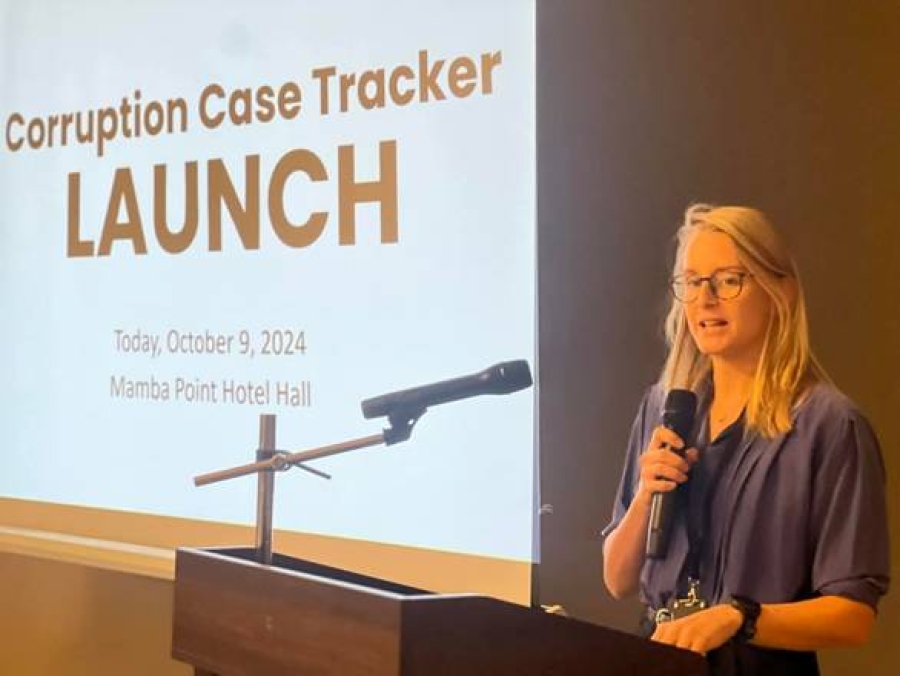
Since its official launch on October 9, 2024 by Nikolina Stalhand, Program Officer at the Embassy of Sweden in Liberia, the Tracker has endeavored to address information gap about corruption by offering a transparent and accessible platform that provides real-time updates on corruption cases, ensuring accountability from relevant authorities and empowering Liberians, the media, civil society and other stakeholders to monitor and meaningfully engage with the process.
“As citizens gain easy access to information about corruption cases, they become more engaged in the process of justice. They can monitor the progress of cases that matter to them and advocate for timely resolutions”, said, Anderson D. Miamen, CENTAL’s Executive Director at the formal launch of the tracker in Monrovia.
The tracker, amongst many others, seeks to enhance transparency and foster increased engagement by providing the public and stakeholders with real-time access to case details and updates. By doing so, citizens are expected to increase demand for accountability by holding government agencies responsible for investigating and prosecuting corruption cases. These efforts would lead to a strengthened collaboration among citizens, media, civil society, government agencies, and international organizations in addressing corruption in Liberia.
As timely investigations and resolutions of corruption cases are essential for maintaining public trust and ensuring that justice is served, the tracker is acting as a catalyst by highlighting cases that have been pending for extended periods and putting pressure on relevant authorities to expedite their investigation and conclusion.
By shining a light on delayed cases, the Tracker provides a platform where citizens are empowered to demand accountability from their leaders. They can see which cases have stagnated and question why. This public scrutiny would incentivize authorities to act more swiftly and efficiently, knowing that their actions are under constant watch by the public. In this way, the Tracker fosters a sense of urgency in addressing corruption issues, ultimately leading to a more transparent and accountable society.
With just a click on the link or a search in Google: https://cct.cental.org.lr, anyone can have their fill and experience this remarkable technological and web-based platform.
Moreover, the Tracker's user-friendly interface ensures that even those with limited technological literacy can access and understand the information. With just a few clicks, users can find detailed information about ongoing and concluded corruption cases, including the names of individuals involved, the nature of the allegations, and the current status of each case. This accessibility not only fosters a sense of empowerment among citizens but also encourages them to participate in the fight against corruption